The gathering
Viewing and visitation
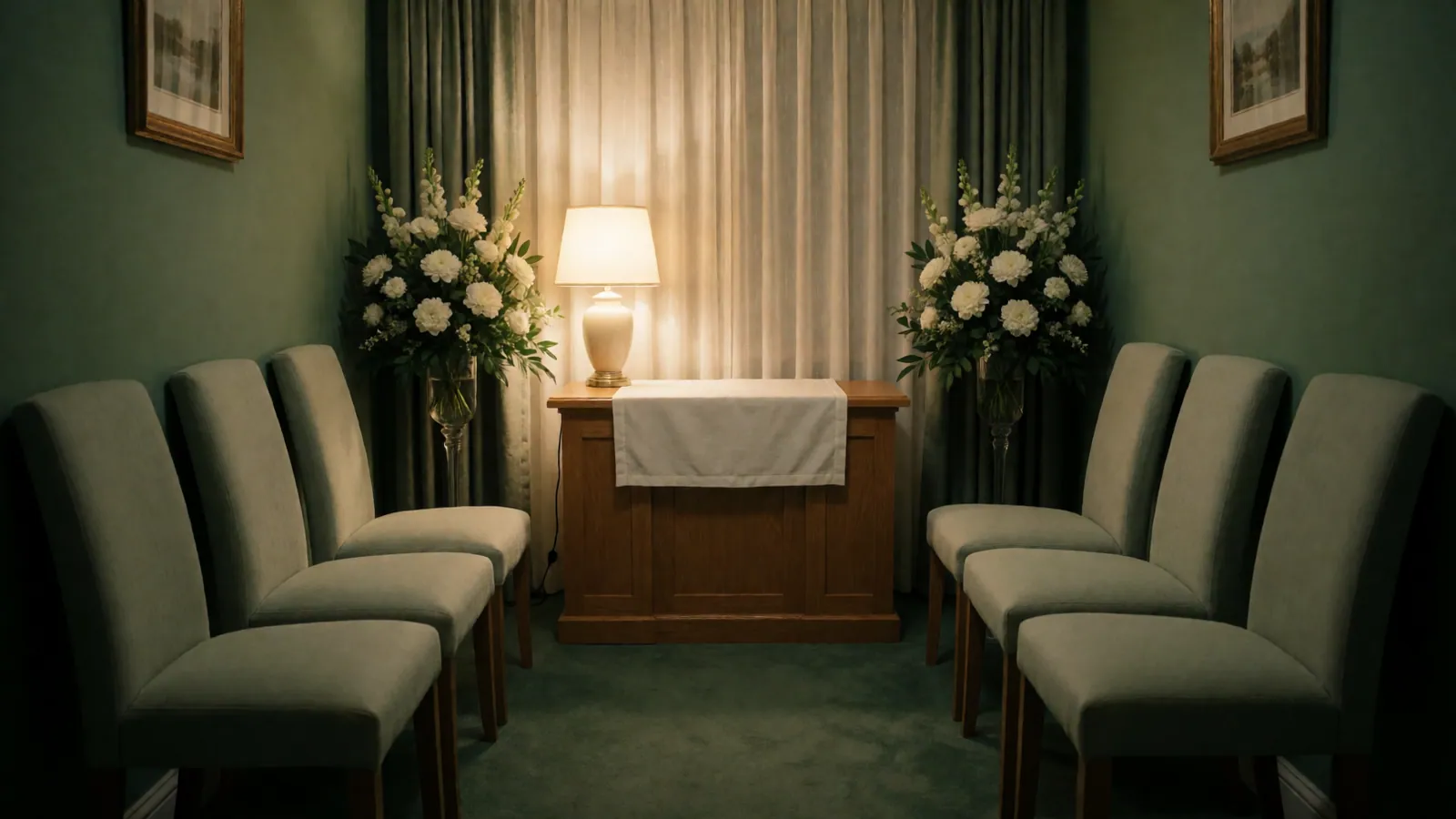
Hours set aside, usually in the late afternoon and evening, when family and friends come to sit with the person and with each other before the service.
What this includes, and what it does not
The first column is ours to do and ours to charge for. The second is either somebody else's charge — the cemetery, the crematory, the clergy, the newspaper, the airline — or it is a thing this arrangement genuinely does not involve. Anything bought on your behalf is passed on at what it costs us.
What this includes
- A room to yourselves for the hours you have chosen
- A private half hour for the immediate family first, before anyone else arrives
- As many or as few evenings as you want, including none
What it does not
- Any obligation at all. A great many families now have no viewing, and that is an ordinary choice rather than a shortened one.
The part we would rather you heard from us
A viewing usually means the body is prepared, and preparation over more than a day or two usually means embalming. That is a decision with its own page, because it is the thing families are most often told is compulsory when it is not.
What a viewing is actually for
It does two things at once and they are worth separating. The first is for the family: seeing that the person has died. That sounds brutal written down and it is the thing that makes it real, and people who did not see the person often describe months of a particular kind of unreality afterwards. It is not compulsory and it is not right for everybody, but it is the reason the practice exists.
The second is for everybody else. A viewing gives the neighbour, the man from the shop and the woman who worked beside them for eleven years somewhere to come. They can stand for ten minutes, say the sentence they have been rehearsing, and go. Many of those people will not come to the funeral and would not be comfortable at it, and this is where they get to do something.
The private half hour, first
Before any published hour begins, the immediate family has the room to themselves with the door shut, and somebody from here stands outside it rather than in it. That half hour is when people react, and nobody should have to do that in front of a queue.
It runs as long as you want it to run. The hours on the notice start when you say they start, and if the family needs another twenty minutes then the first visitor waits in the hall. Nobody minds. Everybody in that hall knows why they are there.
Why the hours are afternoon and evening
The usual shape is two sessions on the same day, one in the middle of the afternoon and one in the early evening, with a break between them. That exists because of work. People come on their way home, and an evening session is the only one a great many friends can attend at all.
The break matters more than it looks. Standing and receiving people for five unbroken hours is beyond most families, and the gap is when they sit down, eat something, and go outside. Two evenings instead of one is common where a family is large or the person was known widely. One session is common too, and so is none.
A great many families now have none
This is worth saying plainly, because a family that does not want a viewing often thinks it is failing at something. It is not. A viewing is one option among several and declining it is an ordinary choice rather than a shortened funeral.
A private viewing for six people and no public hours at all is also a viewing, and it is what a growing number of families choose: the immediate family sees the person, and everybody else comes to the service.
The honest link to embalming
A viewing usually means the person is prepared, and preparation for a public viewing several days after a death usually means embalming. That is a practical consequence and it is not the law: embalming is not ordinarily required, it is never done here without written authority, and a family that declines it is not asked twice — the whole of that argument is here.
There is a version families are rarely offered and should be. A short private viewing within a day or so of the death, with refrigeration and dressing and no embalming at all, is a real arrangement. If that is what you want, say so, and it is what will happen.
What we do not do
Every one of these is short, and every one of them is here because a family somewhere was told the opposite of it on the day of a funeral.
If you are deciding whether to have a viewing
Both answers are ordinary, and the one thing worth knowing first is what a viewing does and does not require. Ring and ask, or read the page about embalming before you decide.