Answered at any hour 000-000-0000

Woodside, Queens · since 1958

A funeral home on 61st Street, and a telephone somebody answers at three in the morning

A family funeral home on 61st Street, serving Woodside and western Queens. Burial and cremation, a chapel that seats a hundred and ten, and a telephone somebody answers at any hour of the night.

  • Answered at every hour of every day
  • A demonstration site — nobody answers this number

If someone has just died, ring us before you do anything else. 000-000-0000 — answered at every hour of every day. Nothing has to be decided on that call. The telephone number on this site is a placeholder and nobody answers it. If someone has died and you need a funeral director now, please call a real one in your area.

Nothing has to be decided tonight

You do not have to decide anything tonight. The only decision in the first hours is which funeral home to call, and even that can be changed afterwards. Everything else — burial or cremation, a service or none, which day, who speaks — waits until the morning, and waits longer than that if you need it to.

Where to start

The first few hours, depending on where they are

The right first telephone call is different in a hospital, at home under hospice care, and at home when nobody expected it — and getting that one call right makes a hard night considerably less hard. Each of these is on the first-hours page in full.

  • At home, expected, with hospice care

    Call the hospice, not 911. The hospice nurse comes, confirms the death and does the first part of the paperwork. Calling 911 instead brings police and an ambulance crew who have no choice but to treat it as an emergency, and it makes a hard night much harder. When the nurse has been, call us — at any hour.

  • At home, unexpected, no hospice

    Call 911. Police and emergency services will attend. In New York City a death that was not expected goes to the Medical Examiner, who decides whether an examination is needed. The person will be taken into their care first, not ours, and we collect them afterwards. Call us anyway, as soon as you can — we will tell you what is happening and deal with that office on your behalf.

  • In a hospital

    There is no hurry at all. The hospital will confirm the death and will keep the person safely for as long as it takes you to decide. Nobody will press you that night. When you are ready, tell the nurse which funeral home you have chosen, and call us. We do the rest with them directly.

  • In a nursing home or care facility

    Tell the nurse in charge, then call us. The facility has a routine for this and will have already contacted the doctor who signs. Some ask a family to name a funeral home quickly; you may take longer than they suggest, and you may change your mind afterwards.

  • In another state, or abroad

    Call us before you arrange anything locally. It is almost always cheaper and simpler to have one funeral home lead, and it can be either end. We will talk to the funeral home there, or to the consulate, and tell you honestly which way round costs less. Do not agree to anything at the far end while you are still in shock at the near end.

The first few hours, in full

The choice underneath all the others

Nearly every family is choosing between three shapes

Everything else on this site is a variation on one of them. None is more respectful than the others, and the one that moves the cost most is the first.

A viewing, a service, and then the cemetery.

Burial, with a service

The traditional shape. The body is present, there is usually a viewing on one or two evenings beforehand, the service is held here or at a place of worship, and everyone goes on to the cemetery for the committal. It takes the longest to arrange, because it depends on the cemetery's diary as well as on ours.

Four to seven days from the death, most often.
What this involves

The same service. A different ending.

Cremation, with a service

Everything the burial version has — a viewing if you want one, a service with the body present, the same chapel — and then the crematory instead of the grave. The ashes come back to you, usually within a week or so, and what happens to them can be decided later or not at all for a while.

Five to ten days, and the ashes some days after that.

What this involves

No viewing, no service, no ceremony here.

Direct cremation

We collect the person, do the paperwork, and the cremation happens without a gathering. Families choose it because it is what the person asked for, because the family is scattered, or because it costs the least of the three by a wide margin. You can still hold a memorial afterwards, anywhere, at any time, with or without us.

Seven to fourteen days, mostly waiting on the permit.

What this involves

Everything we do

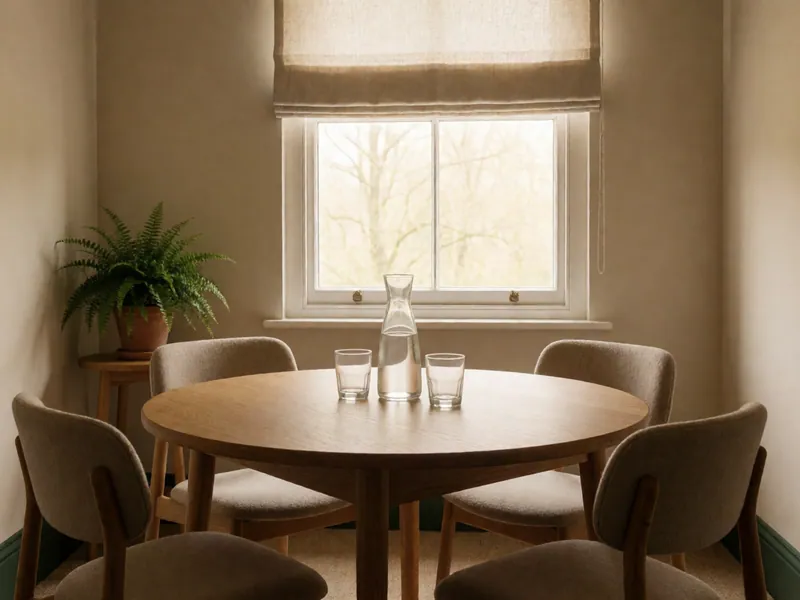
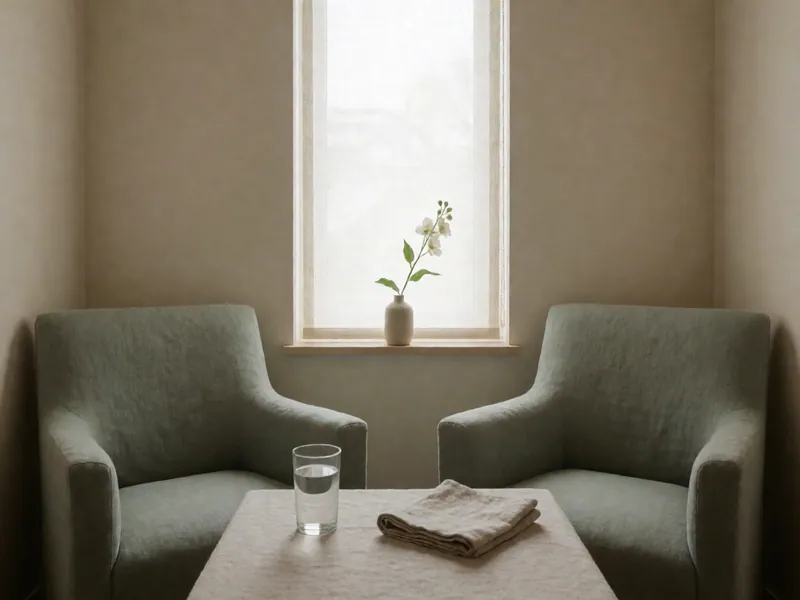
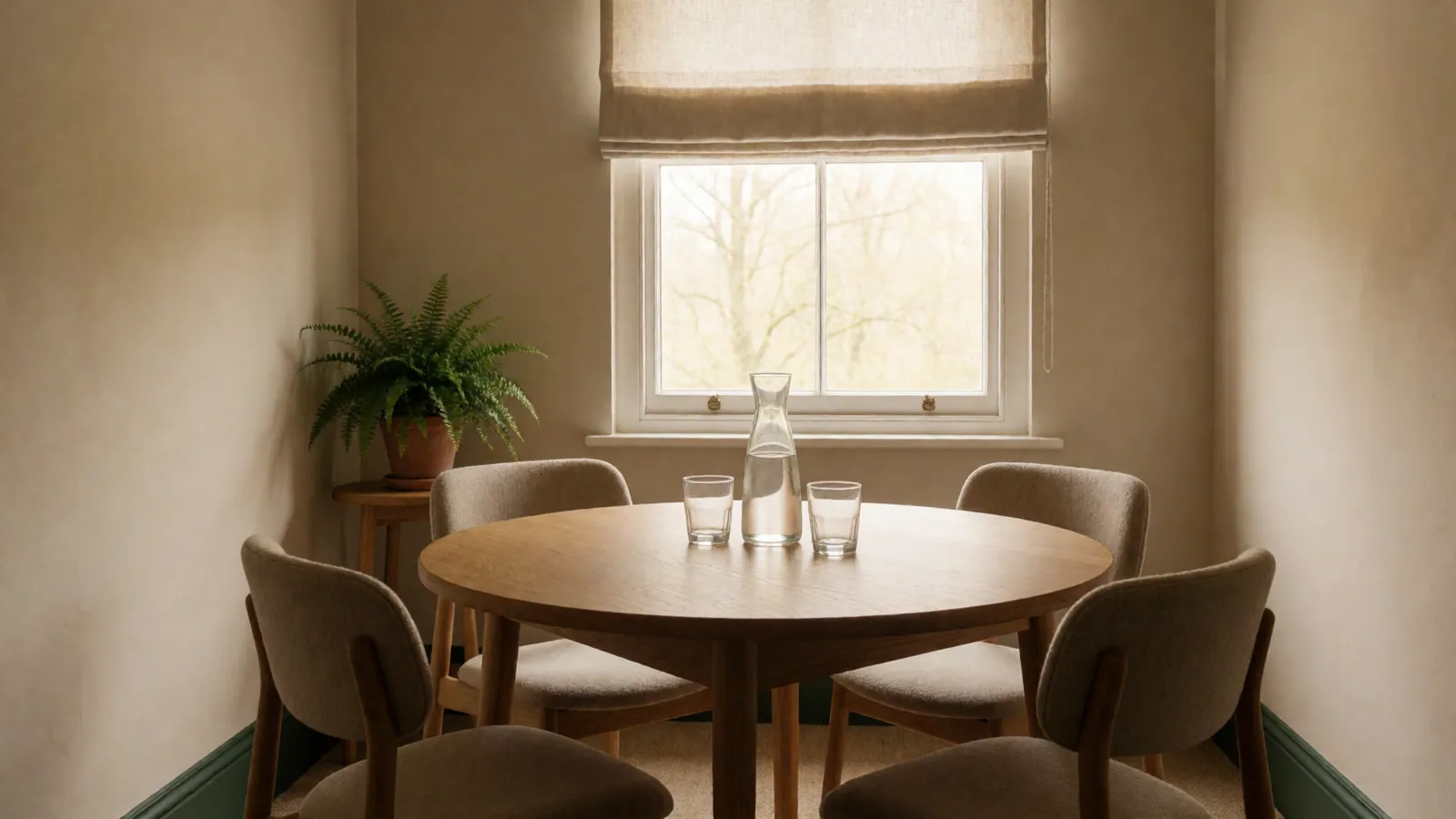
The arrangement room: a round oak table with four chairs, a window, a carafe of water

Money, said plainly

There is no price on this website, and here is why

This site prints no prices, and that is on purpose rather than by omission. Woodside Memorial is a demonstration and any number here would be invented; a made-up price for a funeral is worse than none, because somebody would plan against it. What a real funeral home owes you instead is a printed list you can hold, given to you at the start of the conversation rather than at the end.

What we can tell you is what actually moves the number, which almost nobody does: one decision — burial or cremation — moves it more than every other decision put together, and most of that is the cemetery's bill rather than ours.

What you are entitled to

Some of this is not a favour. It is owed to you

Every funeral provider in the United States has to do the things below, for everybody, whether or not they are asked nicely. A great many families do not know it, which is exactly why it is on the first page rather than the twentieth.

  • A price over the telephone. You do not have to give your name, and you do not have to come in. Ask, and any funeral home has to answer.
  • A printed price list, to keep. Handed to you at the start of any conversation about arrangements, goods or prices — before the discussion, not after it, and it is yours to take away and compare.
  • A separate list for caskets and for outer containers. Given to you before you are shown any, so the first thing you see is the range and not the display.
  • The right to buy only what you want. You may decline any item on the list except the basic services fee, and no funeral home may refuse to sell you the rest.
  • The right to supply your own casket or urn. Bought anywhere. No funeral home may charge you a handling fee for it or refuse to use it.
  • An itemised statement before you pay. Every item you have chosen, what each costs, and what the total is, in writing, before any money changes hands.
  • No compulsory embalming. It is not ordinarily required by law, and no funeral home may tell you that it is when it is not.
  • No casket for a direct cremation. A funeral home that offers direct cremation has to make an alternative container available and may not tell you a casket is required.

The price list, and what has to be on it

The building

A chapel with nothing on its walls

Most weeks the arrangements made here are for families whose funeral customs did not start in Queens. The rooms are plain on purpose: whatever you bring goes up for the day and comes down afterwards.

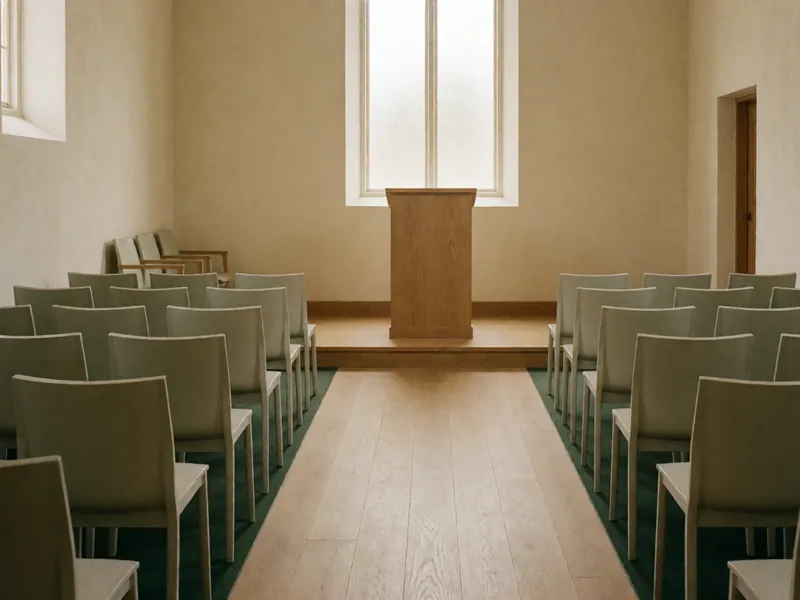
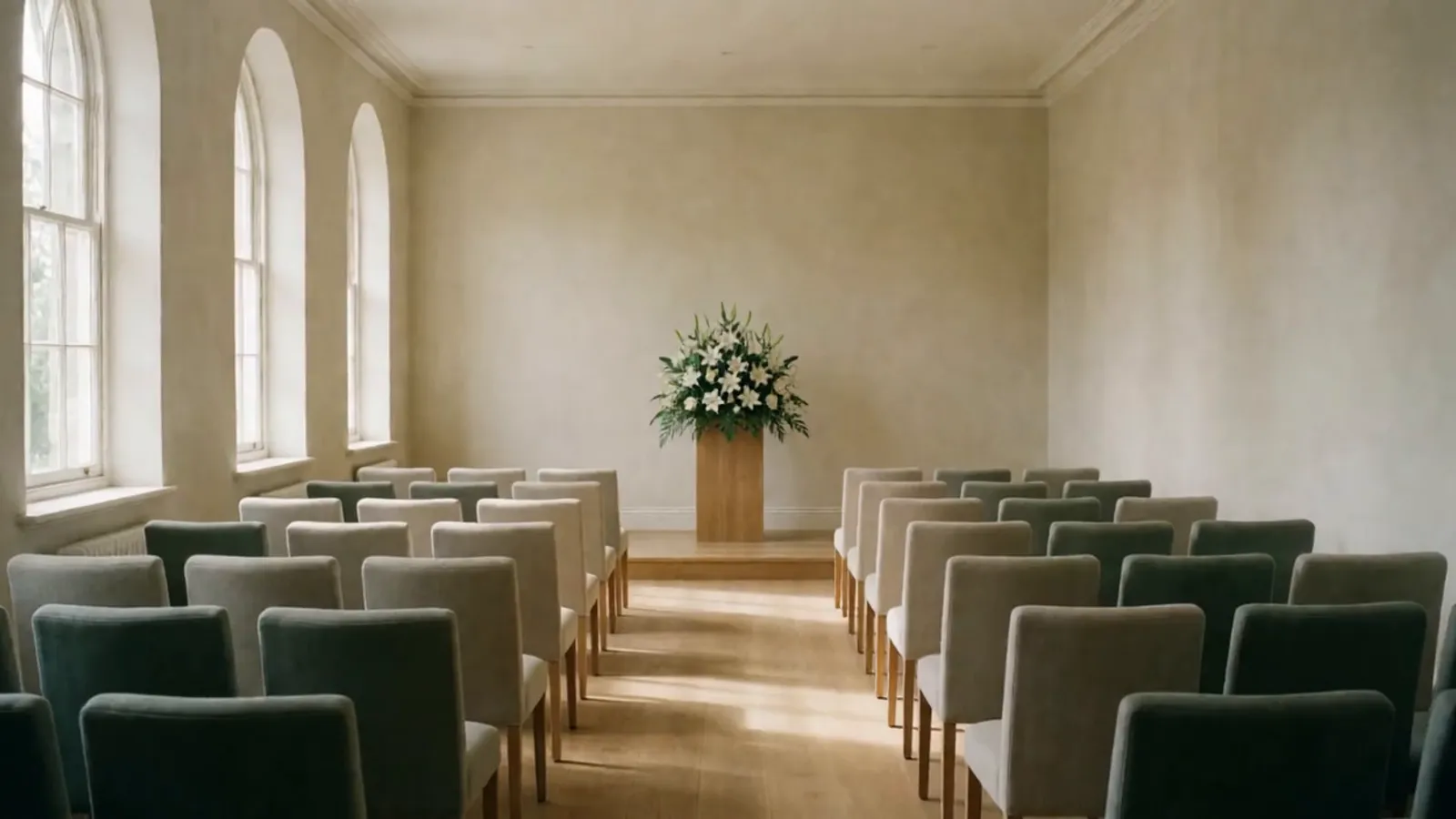
The chapel, empty

The chapel

Seats 110

Plain, light, and belonging to no denomination. There is nothing on the walls, which is deliberate: whatever a family brings — a cross, a photograph, a flag, a prayer in any language — goes up for the day and comes down afterwards. A hearing loop runs the length of it and the front two rows are removable for wheelchairs.

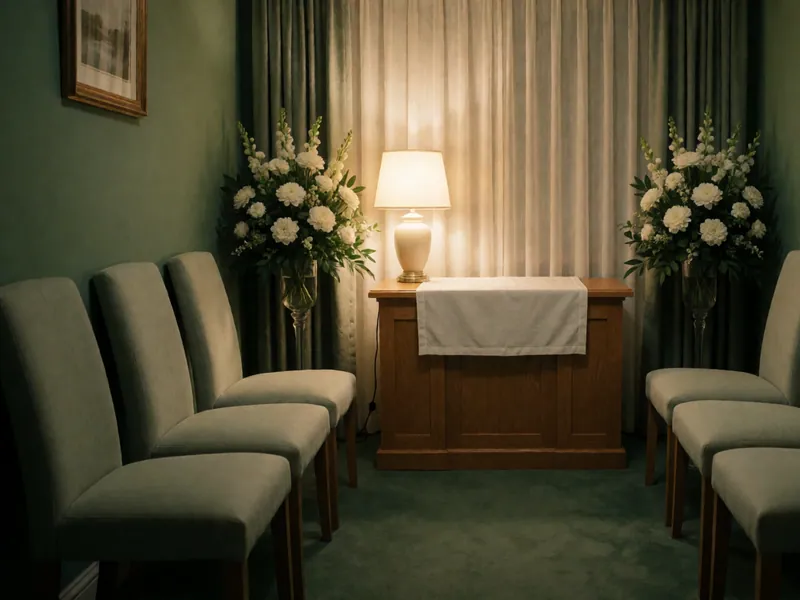
The reposing rooms, empty

The reposing rooms

Seats 40

Two of them, so two families are never in each other's way. Each has its own entrance from the hall, and each can be arranged with seating or left mostly empty for people to stand and move around.

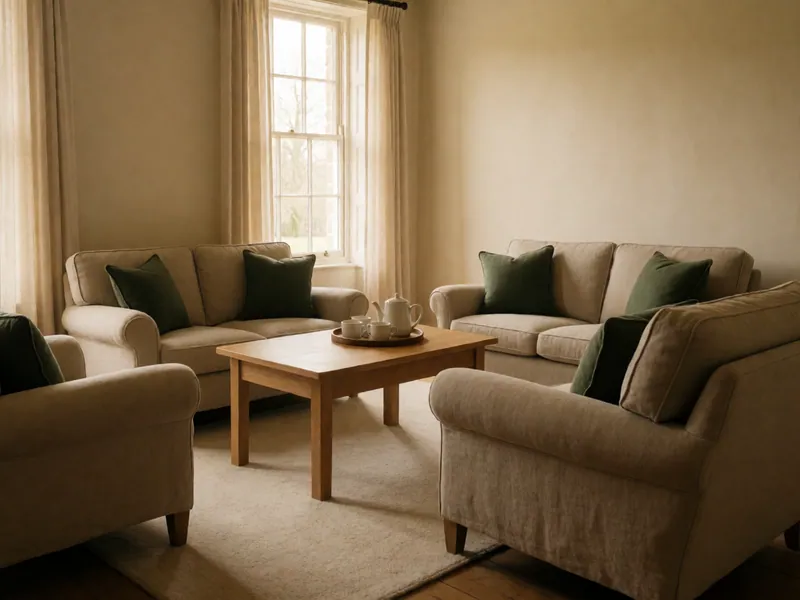
The reception room, empty

The reception room

Seats 60

For afterwards. Tea, coffee and something to eat, and somewhere for people to sit down who have been standing for two hours. Caterers are yours to choose; the kitchen is here and the room costs the same either way.

The arrangement room, empty

The arrangement room

Seats 6

A round table rather than a desk, because a desk has a side you sit on and a side you do not. This is where the price list is put in your hands and gone through line by line.

The family room, empty

The family room

Seats 4

Small, quiet, and next to the chapel. Somewhere to go before the service and somewhere to go if it becomes too much during it. Nobody has to explain why they are using it.

The covered porch, empty

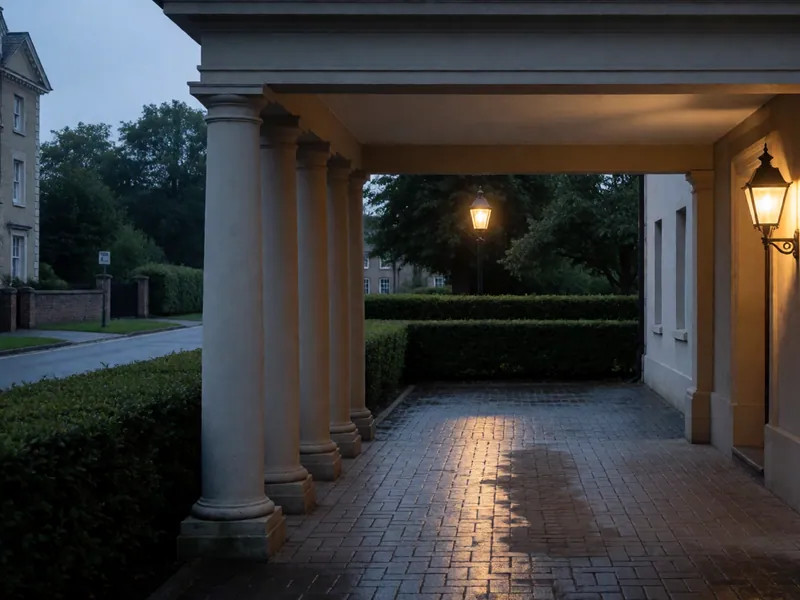
The covered porch

A car can pull in under cover, so an elderly mourner does not get out into the rain. It sounds like a small thing until it is January.

The whole building

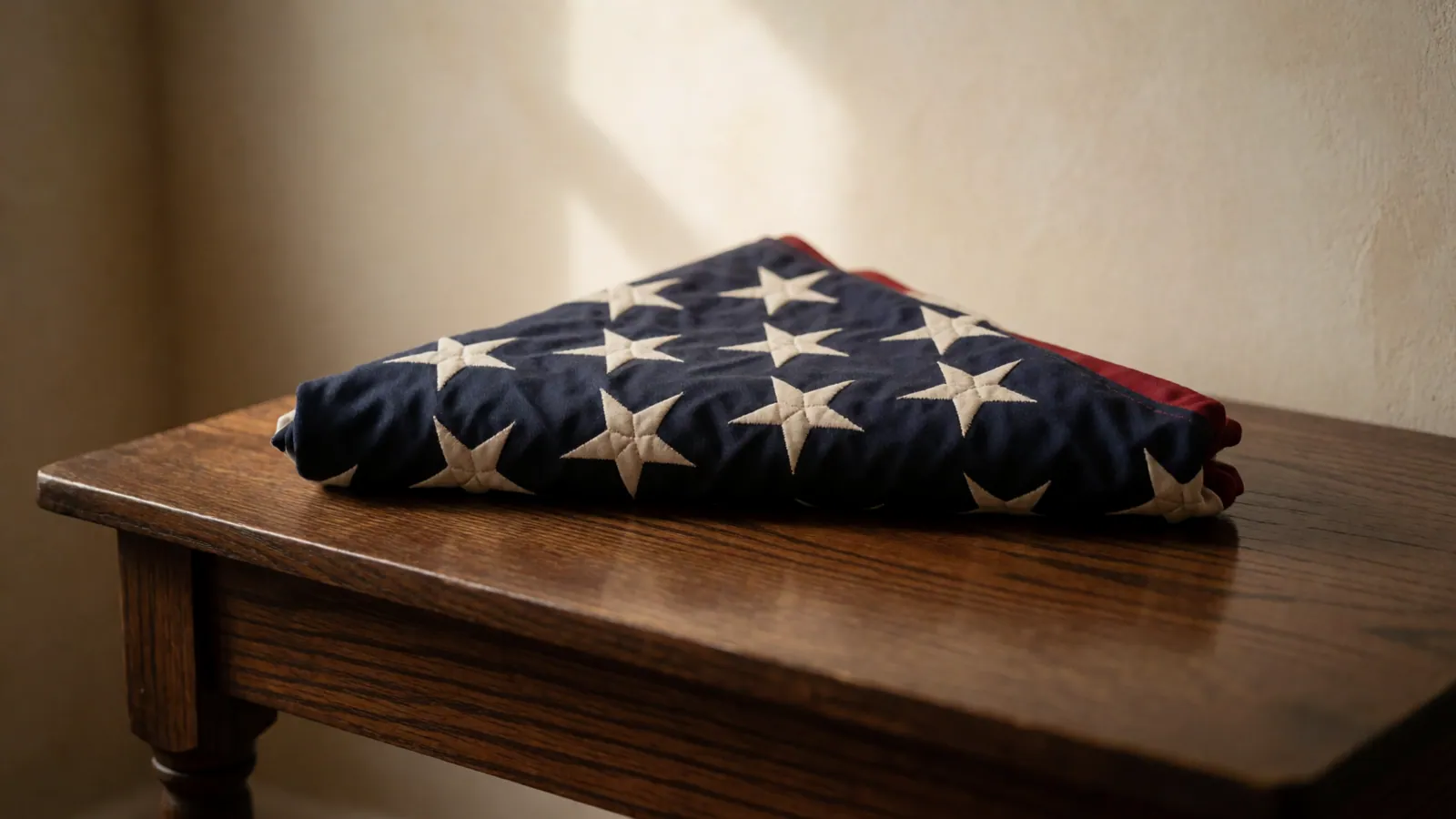
An American flag folded into a triangle on a dark polished table

Paperwork and entitlements

The part a good funeral home is actually for

Registering the death, obtaining the permit, ordering the certified copies, reporting the death to the federal government, and claiming what the family is entitled to. It is unglamorous, it is most of the work, and it is where an unhurried funeral home saves a family weeks.

If the person served, find the discharge papers before anything else. Several entitlements follow from them, most of them at no cost, and a great many families never claim them.

Before you ring anybody

What this funeral home does not do

Nine of them, each with its own page, because the worst version of every one of these is the version a family finds out about on the day. Several are things you may be told the opposite of.

We do not sell the grave, we do not decide the cause of death, we do not lead the rite, we do not give legal or financial advice, and we do not call a telephone call counselling. Saying so is not modesty. It is the only way you can tell what the rest of this site is worth.

The people here

six people, and one of them leads your arrangements from the first call to the last form

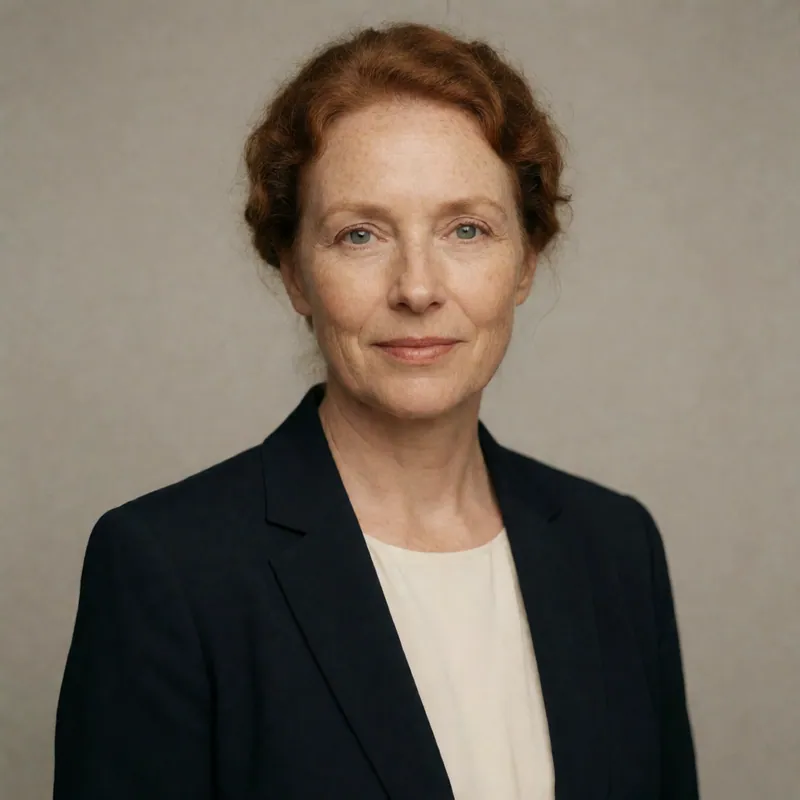
Maeve Halloran, funeral director

Maeve Halloran

Funeral director

Third generation. Grew up upstairs, went away to do something else for eleven years, and came back. Takes most of the first calls at night because she sleeps badly anyway.

Rolando Delgado, funeral director

Rolando Delgado

Funeral director

Handles most of the out-of-state and overseas arrangements, which means he spends a great deal of his week on hold to consulates. Speaks Spanish, and has learned enough of three other languages to be useful at a door.

Grace Villanueva, family services and filings

Grace Villanueva

Family services and filings

The person who actually gets the certificate registered, the permit issued and the veterans' forms in. If you have rung about a copy of something, you have spoken to Grace.

Amit Chaudhury, funeral director

Amit Chaudhury

Funeral director

Joined from a firm in Jackson Heights. Does most of the arrangements where a family wants a rite we do not lead ourselves, and is unembarrassed about asking a family to teach him what it needs.

Tomás Reyes, transfer and care

Tomás Reyes

Transfer and care

Has done more night collections than everybody else here put together. The part of this job that nobody sees is almost entirely his, and he is the reason families say the person looked like themselves.

Eileen Walsh, reception and aftercare

Eileen Walsh

Reception and aftercare

Answers the door and the telephone, and rings families back a month later when everybody else has stopped. Keeps the list of what is available locally for people who are struggling.

About the people, and about the licence

Questions people ask first

Someone has just died. What do I do first?

It depends where they are, and the answer is on the first-hours page. If they were at home under hospice care, call the hospice rather than 911. If it was unexpected, call 911. In a hospital or a facility, the staff will confirm it and keep the person safely, and there is no rush at all. Then call us, at any hour.

Do I have to decide about the funeral tonight?

No. The only decision in the first hours is which funeral home to call, and even that can be changed. Burial or cremation, a service or none, which day, who speaks — all of it waits until the morning and waits longer if you need it to.

How much does a funeral cost?

It depends almost entirely on one decision — burial or cremation — and then on whether there is a viewing and what casket or urn is chosen. This is a demonstration site so it prints no prices at all. What a real funeral home owes you is a printed list you can take away, given to you at the start of the conversation rather than at the end, and prices over the telephone if you ask.

Can I get prices without coming in?

Yes, and you should not have to give your name to do it. Any funeral home in the United States has to give you price information over the telephone if you ask for it.

Is embalming required?

Not ordinarily. Everyone in our care is refrigerated. Embalming becomes a practical necessity for a public viewing several days after the death, and it is usually required for travel abroad. It is never done here without written authority from the family.

Is cremation cheaper than burial?

Almost always, mostly because burial brings a cemetery's charges with it — the grave, the opening and closing, the outer container, the care of the plot. Direct cremation, with no service, is the least expensive arrangement there is, and we are required to offer it.

All twenty questions

Afterwards

The weeks after the funeral are usually harder than the week before it

The callers stop ringing at about the point where it gets difficult. These are written for that stretch rather than for the first week.

eight minutes

The first year, roughly in order

Not a set of stages and not a schedule. Just the shape of it, from families who have been through it, so that the worst part does not also arrive as a surprise.

Read it

seven minutes

Talking to children about a death

Children ask the questions adults have decided not to ask, and they cope considerably better with a plain answer than with a gentle one that turns out to be untrue.

Read it

What is available, and what we are not

Nobody is at the other end of this. This is a demonstration website. Woodside Memorial Funeral Home is not a real funeral home, nobody answers the telephone number on this site, and no arrangement made here reaches anybody. If someone has died and you need a funeral director, please call a real one in your area.

The photographs on this site were generated rather than taken. There is no building to photograph, and a stock library picture of a real funeral would be a considerably worse answer. There is a page about how it was done and what is deliberately not in any of them.

If you need to talk to somebody now

The telephone is answered at every hour of every day. Nothing has to be decided on that call, and nothing said on it is final.