Answered at any hour 000-000-0000
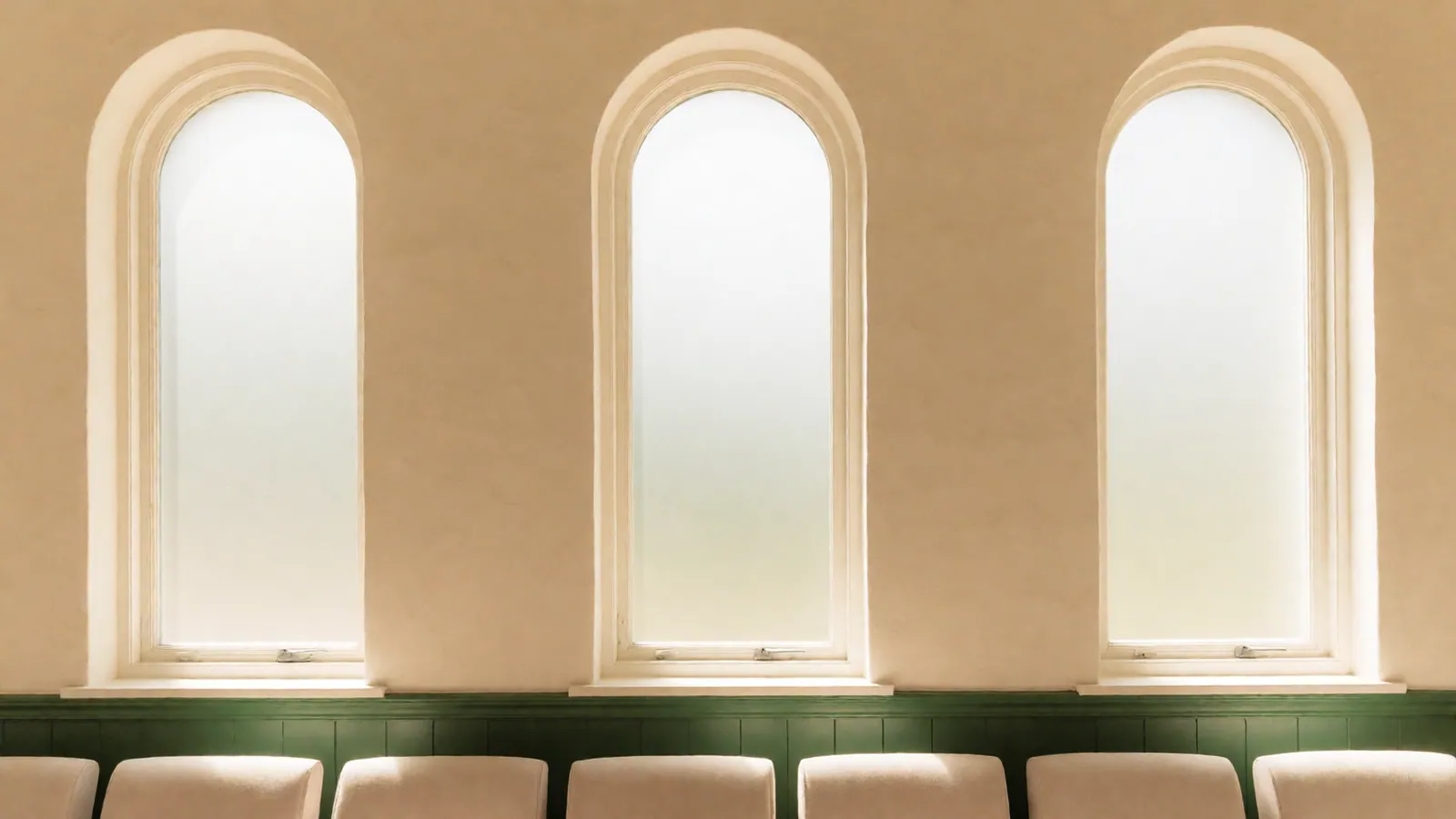
Tall plain windows along the side of the chapel, the glass clear and the walls bare

The building

The chapel

One room with nothing on its walls, which is the most useful thing about it.

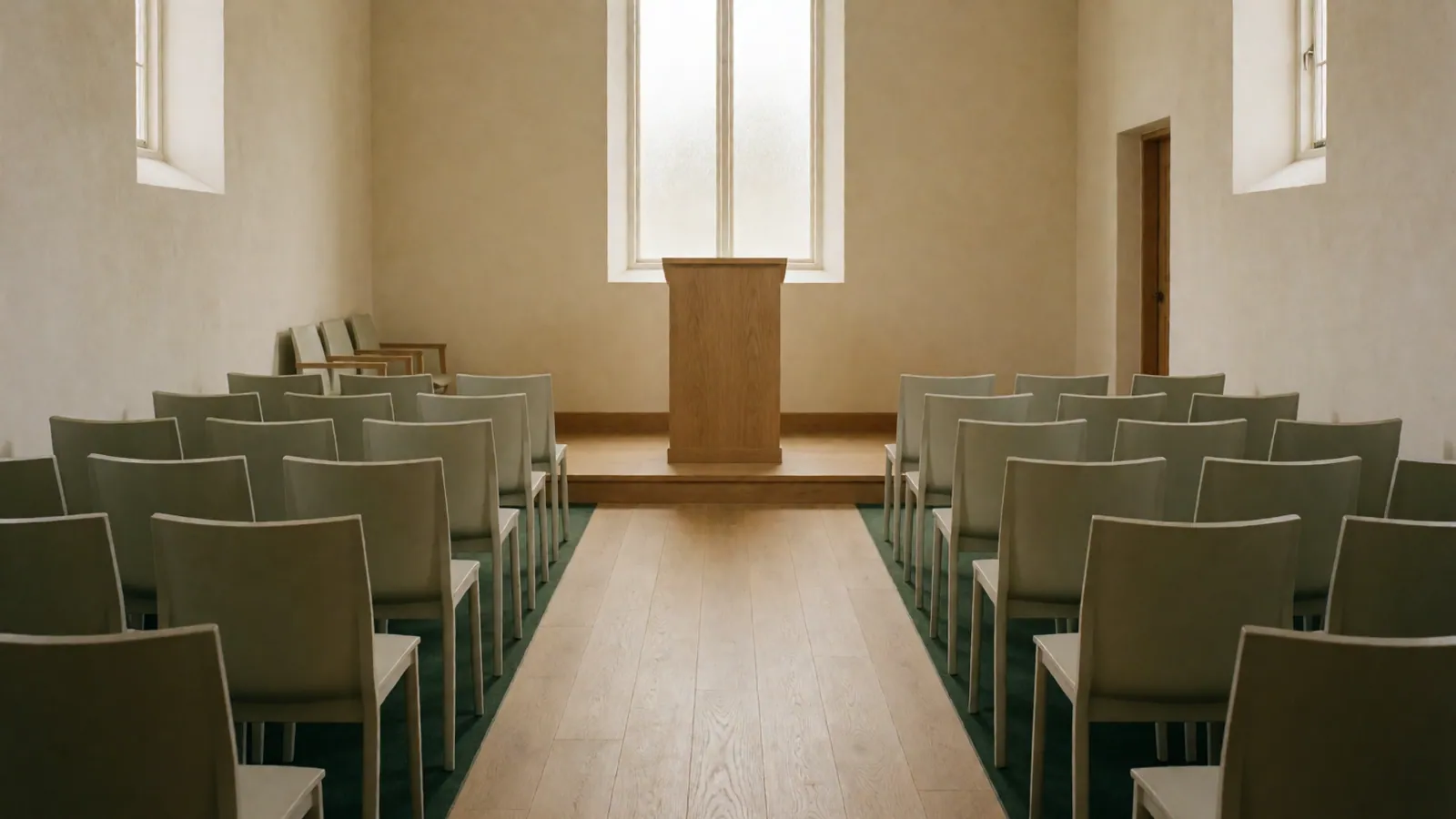
The chapel from the back row, the chairs empty and the walls bare

A room that belongs to nobody

Seats 110

Plain, light, and belonging to no denomination. There is nothing on the walls, which is deliberate: whatever a family brings — a cross, a photograph, a flag, a prayer in any language — goes up for the day and comes down afterwards. A hearing loop runs the length of it and the front two rows are removable for wheelchairs.

Whatever a family brings goes up in the morning and comes down at the end of the day, and the room is plaster again by the evening. That is not a concession made for unusual bookings. It is how the room is used every week of the year, and it is why nothing was ever fixed to the walls in the first place.

What it does not have, and why that is the point

A list of absences is an odd thing to put on a page about a room. These particular absences are the reason the room works, so they are worth naming rather than discovering on the day.

What is in the room

  • A hearing loop that runs the length of it
  • Front two rows that come out, so a wheelchair sits with the family rather than at the side
  • Level access from the covered porch, with no step between the car and the chair
  • Daylight from tall clear windows on both sides, and blinds if you would rather not have it
  • Plain plaster on every wall, and hooks and stands for whatever you bring to put on it

What is not

  • No organ, and no fixed instrument of any kind
  • No altar, no lectern fixed to the floor, and no religious furniture that has to be worked around
  • Nothing on the walls at any time except what a family brought that morning
  • No house rite, no house form of words, and nobody here who leads one

Why there is no organ

An organ is the clearest example of why. An instrument built into a room is an instrument that shapes what happens in it: the music becomes a decision about the organ rather than a decision about the person, and a family whose tradition uses no instrument at all ends up sitting in front of one anyway. So there is not one, and what plays in this room is whatever you bring, played through the room's own system or performed at the front by whoever you ask.

The same argument goes for the furniture. A lectern bolted to a floor has a front and a back and a height, and it decides where the person leading stands. Everything at the front of this room moves, comes out, or is not there.

Here, or at your own place of worship

The chapel is one of two places the service can be, and the choice does not change much of what we do. It changes where everybody stands.

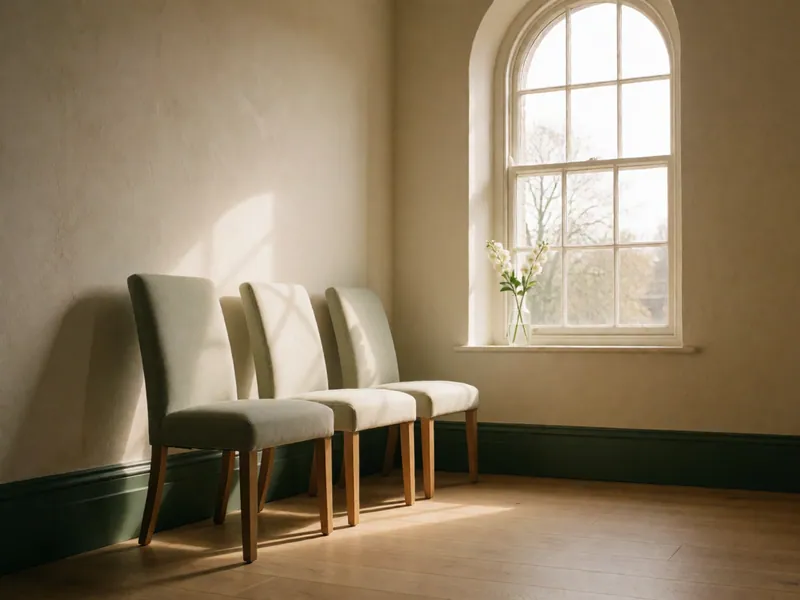
Daylight through a tall clear window, falling in a long panel across the chapel floor
Light, and nothing else, on the walls. The windows are the only fixed thing in the room that anybody notices, and they were kept clear rather than glazed with a picture for the same reason the plaster was left bare.
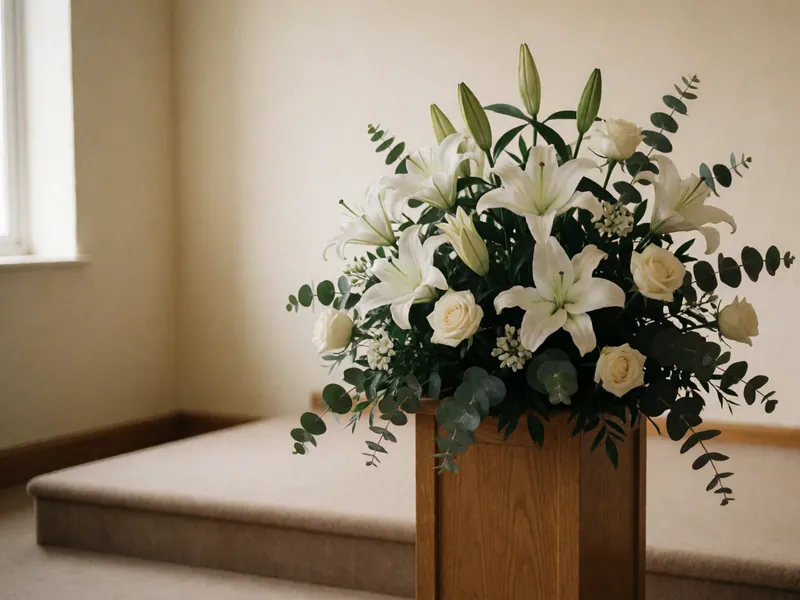
Loose white flowers in a plain vessel at the front of the chapel, with nothing behind them
Flowers we order and pass on at cost. What stands at the front is yours to decide, including nothing at all, which is right in several of the traditions this room holds and is never treated here as an omission.

If you have a church, a temple, a mosque or a gurdwara, the service is held there and we work to it: we bring the person, we bring the family, we keep to the timings that building sets, and we go on to the cemetery or the crematory afterwards. Nobody from here stands at the front. If you have no such building, or the one you have is too far, or the family is too small to fill it, the service is held in this room instead, and it holds whatever you would have done in the other one.

What we do not do in either place is lead it. If you have a priest, an imam, a rabbi, a pandit or a celebrant, we work to them and we pay them on your behalf and pass on exactly what they charge. If you have nobody, we will find somebody who will do it well and let you decide about them, which is a different thing from providing them.
Music, readings, and a language other than English

These are asked for apologetically about once a week, and none of them is a special request in this room.

  • Music

    Recorded, played live at the front, sung by the family unaccompanied, or none at all. There is no instrument in the room to work around and no house repertoire to choose from. Bring what you want played and it is played.

  • Readings

    Anybody may read, of any age, for as long or as short as they can manage. Nobody has to be told beforehand who is reading, and a reader who cannot get through it is an ordinary occurrence rather than an incident.

  • A language other than English

    Ordinary. Some or all of the service, one reading, the whole rite, or the part the older people in the room came for. We do not need to understand it to run the day around it, and we would rather be told what is happening than guess.

  • Length

    A service that runs long is a service that runs long. The room is yours for the day it is booked for, and there is no second family waiting in it.

If you want to know whether the room will work for you

Ring and describe what you have in mind, including the parts you think might be awkward to ask about. Those are usually the parts this room was altered for.