Answered at any hour 000-000-0000
The front hall of the house, the staircase turning away at the back, empty in the middle of the morning

About

The family

Opened in 1958 by Vincent Halloran in what had been a doctor's house, at a time when this was an Irish parish and a funeral meant a wake in a front room.

Since 1958

What changed, and what did not

Three generations sounds like a slogan. What it means here is one building on one street, altered several times around the people who kept walking into it.

The neighbourhood changed and the business changed with it. Most weeks now the arrangements made in this building are for families whose funeral customs did not start in Queens, and the building has been altered several times so it can hold a rite it was not designed for.

That is most of what the third generation has done here: taken the walls back to plaster, taken everything off them, and made rooms that can be whatever a family needs them to be for one afternoon.

The rest of it has not changed at all. Somebody answers the telephone at four in the morning. Somebody goes out in the rain. Somebody sits with a family for an hour and a half and does not look at the clock.

A funeral home is a building, a vehicle and a telephone. The building matters less than people expect. The telephone matters more than anything else on that list, because the call that starts all of this is rarely made in daylight and is almost never made by somebody who has done it before.

What being small actually buys you

Small is not a virtue by itself and we would not sell it as one. What it means here is arithmetic. There are six of us, so the person who takes your first call at four in the morning is the person still answering the telephone a fortnight later when the last form goes in. Nobody hands you on to a colleague. Nobody has to be told about your family twice.

It cuts the other way too, and it is fairer to say so. A larger firm has more vehicles, more staff at the weekend and more slack in a bad week. We have less of all three. What we have instead is that the arrangements you make are made with somebody who will still be here in a month.

What the bare walls have to do with it

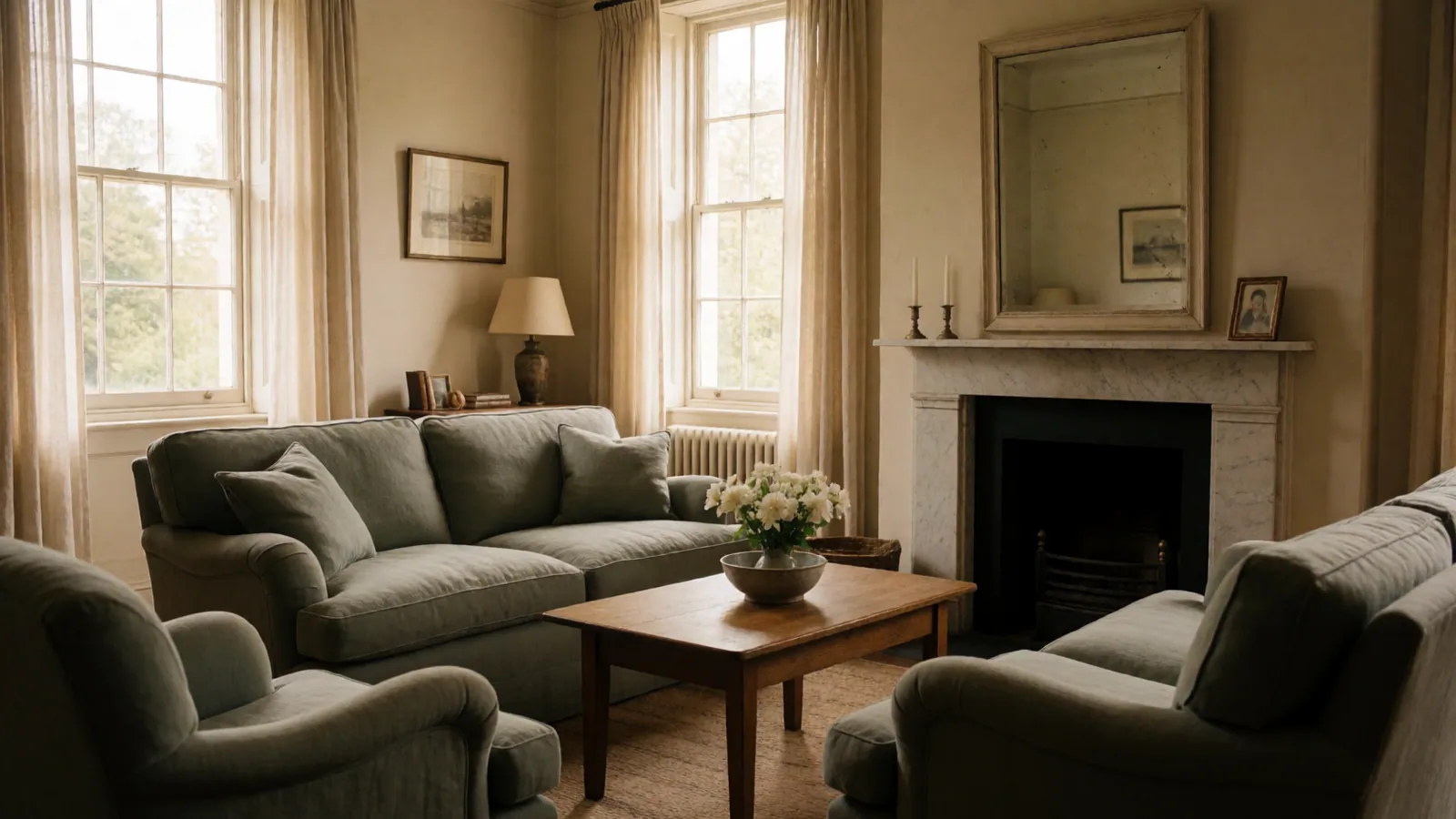
The rooms in this building have nothing on them, and that is the single most useful decision anybody here has made. It was a practical decision rather than a tasteful one. A room with a symbol on the wall belongs to one tradition, and it then has to be quietly apologised for to every family that does not share it. A room with bare plaster belongs to whoever is in it that afternoon.

So whatever a family brings goes up in the morning and comes down at the end of the day. A cross, a photograph, a flag, a cloth over a table, a prayer written out in a script nobody here can read. None of that is unusual in this building and none of it has to be asked for as a favour.
Said first, not later

The uncomfortable sentence goes at the top

Most funeral homes keep their least comfortable sentence on a page you have to go looking for. Ours is the third thing on this one.

We are not the cheapest way to do this

We are a small business and we are not the cheapest way to bury or cremate somebody in Queens. What we would rather be is the one that tells you, in the first conversation, what the cheapest way is.

That is not modesty and it is not a negotiating position. A family in the first week is in no condition to shop around, everybody in this trade knows it, and the only useful thing anybody can do about it is say the true thing out loud before the arrangement meeting rather than after it.

So if the least expensive route is the right one for your family, we will describe it plainly, and we will describe it whether or not you are sitting in this building when we do. There is a whole page about what moves the total and which half of it is even ours to move.

The neighbourhood

Most weeks the arrangements made here are for families whose funeral customs did not start in Queens

That is a plain description of this part of the borough rather than a claim about us. It is also the reason the rooms look the way they do.

Where the families come from

We work across fourteen neighbourhoods in western Queens. Most of the week is the five closest ones, and the rest is wherever a family has moved to since the person they are burying arrived.

  • Woodside
  • Sunnyside
  • Astoria
  • Long Island City
  • Jackson Heights
  • Elmhurst
  • Maspeth
  • Corona
  • East Elmhurst
  • Rego Park
  • Middle Village
  • Ridgewood
  • Forest Hills
  • Glendale

The languages spoken in this building

five languages are spoken by the people who work here. That is not a translation service and we will not describe it as one. Where a family needs a language none of us has, we say so at the first call and work to whoever the family brings.

  • English
  • Spanish
  • Tagalog
  • Bengali
  • Nepali

None of what follows from that needs a special request. A service in a language nobody here speaks. A rite led by somebody we have never met, to a shape we have to be taught on the day. Music we have not heard before. A wake that runs past the hours the office keeps. Those are ordinary weeks in this building, and the building was altered so that they would be ordinary rather than accommodated.

The rite itself is not ours and we do not lead it. What is ours is the room, the day, the paperwork and the arrangements around the edges of it, and keeping those out of the way of whatever a family has come here to do.

If you would rather read than ring

Nothing on this site asks you to decide anything, and none of it has to be read in order. The telephone is answered at every hour of every day if you would rather ask a person.